Golden Hour Geography: Why Some Beaches Put on a Better Sunset Show Than Others
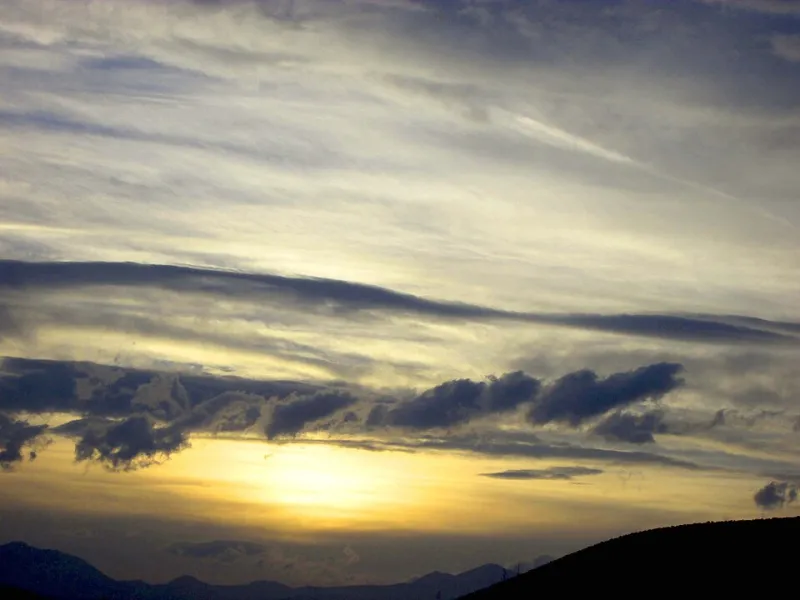
Photo: Делфина, CC BY-SA 4.0, via Wikimedia Commons
You've probably had the experience. You're on a beach, the sun is going down, and it's... fine. Pink-ish. Pretty, sure. But then you visit somewhere else — maybe the Gulf Coast, maybe the Pacific Northwest — and the sky does something that makes you stop talking mid-sentence. The kind of sunset that makes people applaud.
What's the difference? It's not random. The quality of a coastal sunset comes down to a combination of geography, atmospheric conditions, seasonal timing, and a handful of factors most travelers never think about. Once you understand them, you can actually start choosing your beach destinations with golden hour in mind.
The First Rule: Which Way Does the Beach Face?
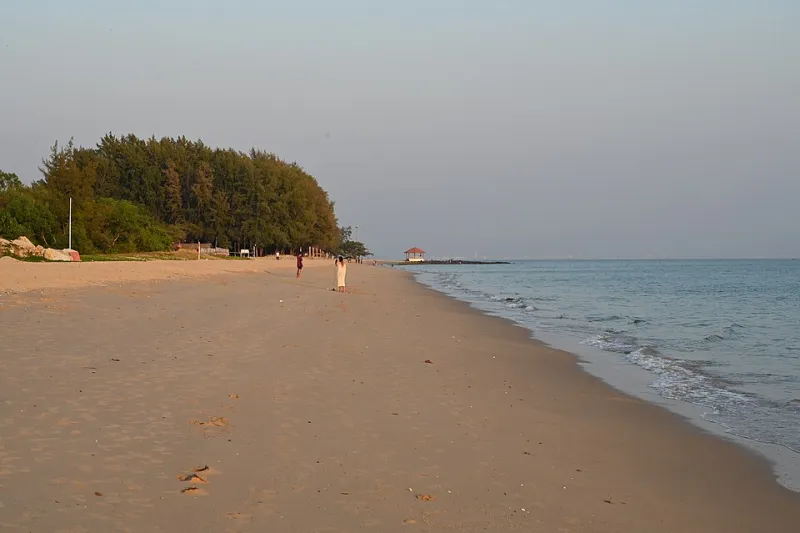
This one seems obvious but gets overlooked more than you'd think. To watch the sun set over water, the beach has to face west — or at least have a westward component to its orientation. That eliminates most of the US East Coast for classic water sunsets. From Maine to Miami, the ocean is to the east, which means the sun sets behind you, over land.
That's why the Gulf Coast and the West Coast dominate America's sunset conversation. Beaches along the Florida Gulf side — Clearwater, Siesta Key, Fort Myers — face due west into open water. So does much of coastal California, Oregon, and Washington. The Florida Keys curve around to face north and west in places, giving spots like Key West their legendary sunset culture (Mallory Square's nightly sunset celebration is basically a civic institution at this point).
East Coast travelers aren't entirely out of luck, though. Some beaches on the Outer Banks of North Carolina face southwest. Parts of Cape Cod face west across Cape Cod Bay. And while you won't see the sun drop into the Atlantic, the sky behind you can still go spectacular — especially if there are interesting clouds.
What's in the Air Matters Enormously
Here's where it gets interesting. The color intensity of a sunset depends heavily on what the light is traveling through as the sun approaches the horizon. Light at low angles has to pass through much more atmosphere than light coming from overhead, which scatters shorter blue wavelengths and lets the longer reds and oranges dominate. The more particles in that air column — dust, fine water droplets, sea salt aerosols — the more dramatic the scattering.
This is why sunsets after storms are often spectacular. The atmosphere has been stirred up, moisture is redistributed, and light has more to interact with. It's also why deserts near the coast, like the areas around San Diego and the Sonoran coast of the Gulf of California, produce such vivid colors — fine dust particles extend the scattering effect.
But there's a balance. Too much pollution — the heavy, localized kind from industrial areas — actually muddies sunsets rather than enhancing them. The sweet spot is clean air with some natural particulate matter: sea salt, fine dust, thin high-altitude clouds.
Clouds: The Underappreciated Variable
A perfectly clear sky at sunset is actually less impressive than a sky with the right kind of clouds. What you want is high-altitude cirrus clouds — those wispy, streaky formations that catch light and hold it long after the sun drops below the horizon. They act like a canvas, lighting up in pinks and purples and golds that keep shifting for 20 to 30 minutes after sunset.
Low, heavy cloud cover blocks the show entirely. But partial cloud cover with clear sky near the horizon? That's the formula. The sun gets under the clouds right at the end, illuminating them from below.
The Pacific Northwest — despite its reputation for gray weather — actually produces some of the most dramatic coastal sunsets in the country precisely because of its dynamic cloud patterns. Cannon Beach in Oregon and the Olympic Peninsula in Washington have devoted sunset followings among photographers for exactly this reason.
Seasonal Timing and Where the Sun Actually Sets
The sun doesn't set in the same spot year-round. In summer, it tracks north of west at sunset; in winter, south of west. Depending on the orientation of a particular beach, this means the sun might drop directly into the water at certain times of year and set over land or at an angle at others.
Key West's latitude and east-west orientation mean the sun sets over open water virtually year-round. But at a beach that faces more southwest, like parts of the Gulf Shores in Alabama, summer sunsets arc northward and can actually set over land rather than water — while winter sunsets go more directly into the Gulf.
For photographers especially, checking the sun's azimuth for your destination and travel dates using an app like PhotoPills or The Photographer's Ephemeris is worth the few minutes it takes. You might discover that visiting a week later lines up the sun perfectly with the horizon at your specific spot.
The Best Regions for Consistent Sunset Drama
Based on geography, atmospheric conditions, and consistent reporting from travelers and photographers, a few US coastal regions reliably deliver:
Florida Gulf Coast — Particularly Siesta Key, Clearwater Beach, and Fort Myers Beach. Flat horizon, warm Gulf air with sea salt aerosols, and a westward-facing shoreline make this the most consistent sunset region in the eastern US. Summer humidity can soften colors slightly; fall and winter often produce the crispest, most vivid shows.
Key West — The sunset ritual here is cultural as much as meteorological, but the geography backs it up. Clear southern horizon, warm tropical air, and reliable easterly trade winds that keep the sky dynamic.
Oregon and Northern California Coast — Cannon Beach, the Marin Headlands, and Point Reyes deliver dramatic, moody sunsets with the kind of atmospheric complexity that photographers love. The Pacific is wide open to the west, and storm-influenced cloud patterns give these coasts variety that more stable climates can't match.
Southern California — Malibu, Santa Monica, and the beaches around La Jolla benefit from clean Pacific air, occasional marine layer that burns off by late afternoon, and the dust influence from the inland deserts. Summer is actually less spectacular here due to persistent marine fog; late fall and winter tend to produce the most vivid color.
Hawaii — Technically US, and worth mentioning because the combination of clean mid-Pacific air, volcanic dust in the atmosphere, and unobstructed western horizon makes sunsets from the Kona Coast of the Big Island and the west shore of Maui genuinely world-class.
How to Chase a Better Sunset Wherever You Are
Even on coastlines that don't face west, you can improve your odds. Check the forecast for high cloud cover rather than clear skies. Position yourself with an unobstructed view of the western horizon, even if the water isn't in that direction. Arrive 30 minutes before sunset and stay 20 minutes after — the afterglow, called the Belt of Venus, is often the most photogenic part of the whole event.
And pay attention to the east. Sunsets paint the eastern sky in pastels as the last light bounces off the atmosphere behind you. On a beach that faces east, turning around at the right moment can give you something worth photographing after all.
The ocean at golden hour is one of the simplest pleasures coastal travel offers. Knowing a little about why it happens the way it does just makes it more worth chasing.