Saltwater Dreams, Small-Town Reality: What Happens When Everyone Moves to the Beach
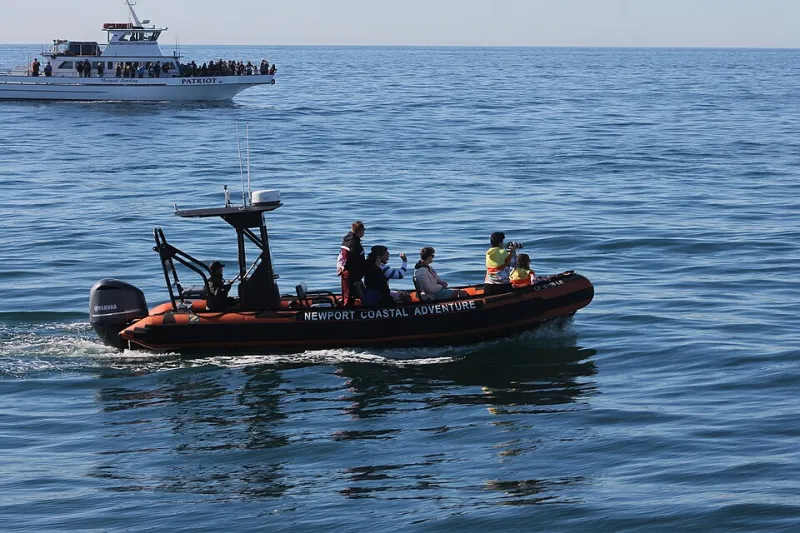
Photo: Noah Wulf, CC BY-SA 4.0, via Wikimedia Commons
There's a version of the beach town story that's easy to romanticize. You leave the city, trade your commute for a morning walk on the sand, and settle into something slower, saltier, and altogether better. That version isn't wrong, exactly — but it's only half the picture.
The other half belongs to the people who were already there.
Across coastal America, from the Outer Banks of North Carolina to the Sea of Cortez-facing towns along the California border, something is shifting. And while the remote-work migration narrative got plenty of attention during and after the pandemic, the full story of who's moving to beach towns — and why — is messier, more layered, and frankly more interesting than any single headline can capture.
It's Not Just the Laptop Class
Sure, remote workers are part of the equation. But the people relocating to coastal communities include retirees cashing out of expensive inland metros, young families priced out of suburbs, service industry workers following the hospitality boom, and second-home buyers who eventually decided to make things permanent.
In Rockport, Texas, a small Gulf Coast town still bearing scars from Hurricane Harvey, longtime residents describe watching entire neighborhoods turn over in the span of three or four years. "We've always had snowbirds," says one local business owner who's run a bait shop near the marina for over two decades. "But these folks aren't leaving anymore. They're staying, and they're bringing everybody they know."
The same pattern is playing out in places like Astoria, Oregon; Apalachicola, Florida; and Tybee Island, Georgia — towns that were once considered too quiet, too remote, or too rough around the edges to attract serious interest. Now they're landing on "best coastal towns" lists and fielding calls from real estate developers.
The Housing Crunch Nobody Warned Them About
For communities that built their identities around fishing fleets, seasonal tourism, and a certain unpretentious way of life, rapid population growth brings an immediate and painful side effect: the cost of living goes up, and it goes up fast.
In Brunswick County, North Carolina — a cluster of beach communities just south of Wilmington — median home prices have jumped dramatically over the past five years, pushing out the very workers that the local tourism economy depends on. Hotel housekeepers, restaurant line cooks, and marina staff are driving 45 minutes each way from inland towns because they simply can't afford to live where they work anymore.
"We're loving these towns to death," says a city planner in one Florida Panhandle community who asked not to be named, citing ongoing negotiations with developers. "Everyone wants the authentic fishing village experience, but nobody wants to fund the infrastructure that keeps it authentic."
It's a tension that doesn't have an easy resolution. New residents bring tax revenue, business investment, and energy. They also bring demand — for better roads, faster internet, more restaurants, and amenities that start to look a lot like the cities they left behind.
What Old-Timers Are Feeling
Spend enough time talking to longtime coastal residents and a few consistent themes emerge. There's pride — many are glad their towns are finally getting recognition. There's anxiety — about whether the character of the place will survive. And there's something harder to name, a kind of quiet grief for the version of home that's already gone.
In Ponce Inlet, Florida, a retired shrimper named Dale put it plainly: "My grandfather built his house here. My father built his house here. My kids can't afford to build a house here. That's not progress. That's something else."
At the same time, some newcomers are genuinely committed to the communities they've joined. Volunteer fire departments in rural coastal areas have seen membership spikes. Local conservation groups are picking up new donors. A few beach towns have watched new residents champion causes — protecting nesting sea turtle habitats, opposing overdevelopment — more aggressively than some lifelong locals.
The picture, in other words, is complicated.
The Environmental Math
More people at the coast means more pressure on ecosystems that were already stressed before anyone showed up with a moving truck. Coastal wetlands are being filled to accommodate new housing. Stormwater runoff from construction is affecting water quality in estuaries. Boat traffic is up in channels that manatees and dolphins use as corridors.
Environmental advocates in places like the Lowcountry of South Carolina are raising alarms, pointing out that the natural beauty drawing people to coastal towns is the same thing being quietly eroded by their arrival. "Growth isn't inherently bad," says one marine biologist who works with a nonprofit focused on Georgia's barrier islands. "But unmanaged growth in ecologically sensitive areas? That's a different story."
Some towns are trying to get ahead of it. Municipalities along the Gulf Coast are experimenting with conservation easements, short-term rental caps, and stricter building setbacks. It's slow, often contentious work — and not every community has the political will or the legal tools to do it effectively.
What's Actually Working
Here and there, you find bright spots. Towns that have managed growth with something resembling intention.
Bayou La Batre, Alabama — a small shrimping community southeast of Mobile — has worked to preserve its working waterfront by keeping commercial fishing infrastructure intact and resisting the conversion of dock space into boutique marinas. It hasn't been painless, but the town has held onto a core identity that other communities have watched slip away.
In Cannon Beach, Oregon, strict design standards and a long-standing commitment to limiting chain businesses have kept the town feeling coherent even as visitor numbers climb. The trade-off is that housing costs are eye-watering — a problem the town is still grappling with.
There's no perfect model. But the communities that seem to be navigating the transition most thoughtfully share a few things: early conversations about what they want to protect, inclusive planning processes that bring in voices beyond property owners, and a willingness to say no to some forms of growth even when the short-term money looks good.
The Shore Ahead
Coastal America is changing. That's not a prediction — it's already happening, in real time, in towns you may have never heard of and towns you've been visiting for years.
For travelers, that means something worth sitting with. The beach town you fall in love with on a vacation is also somebody's home, somebody's livelihood, somebody's inheritance. How we show up in these places — as visitors, as potential transplants, as people who care about the coast — matters more than it used to.
The tide, as they say, doesn't ask permission. But people can make choices. And the communities figuring out how to balance welcome with preservation are the ones that might actually have a shore worth visiting — and living in — a generation from now.