Something Strange Is Washing Ashore: The Rare Shells Showing Up on US Beaches Right Now
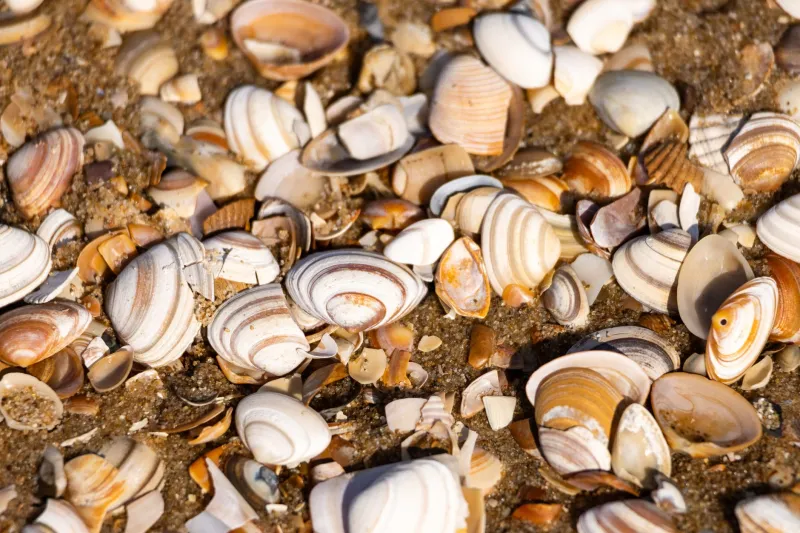
There's a woman in Sanibel, Florida who has been collecting shells for thirty years. She knows every common variety by touch — the lightning whelk, the lettered olive, the coquina. But last spring, she picked up something that stopped her cold. It was a Glory of the Atlantic cone shell, a species typically found in deeper Caribbean waters, sitting in the wet sand like it had always belonged there.
She's not alone. From the Outer Banks to the Gulf Coast to the shores of Cape Cod, beachcombers are reporting finds that don't quite fit the usual lineup. Marine biologists are paying attention. And if you're planning a coastal trip anytime soon, you might want to keep your eyes a little lower to the ground.
Why Now? The Science Behind the Surge
The short answer is that the ocean is moving differently than it used to.
Warm-water intrusions — stretches of tropical water pushing farther north or inshore than normal — have been documented with increasing frequency along the Atlantic and Gulf coasts. These events carry with them the organisms and objects that live within those water masses. Shells from deeper tropical zones hitch a ride and end up deposited on beaches that wouldn't ordinarily see them.
"We're seeing a combination of factors," says Dr. Miriam Calloway, a marine invertebrate biologist based out of the University of Miami. "Stronger storm systems pulling material up from depth, warmer surface temperatures extending the range of certain species northward, and shifts in longshore drift patterns that are moving sediment — and everything in it — in new directions."
It's not just about warmth, either. Significant storm activity stirs up the seafloor, dislodging shells from deep-water environments that rarely make contact with the surface world. When those storms push water toward shore, they carry unexpected cargo. The result is what some collectors are calling a "bonus season" — a stretch of time when the odds of finding something genuinely unusual are higher than they've been in decades.
What's Actually Turning Up
The varieties showing up out of context depend heavily on where you're walking.
Along the Gulf Coast, collectors in Texas and the Florida Panhandle have been finding Junonia shells — a bucket-list find under normal circumstances — with slightly more regularity than usual. These large, spotted volutes typically live offshore in deeper water, and finding one intact on the beach has always been considered a rare event. Local shell clubs have noted a modest but real uptick in reported finds.
Further up the Atlantic seaboard, North Carolina beaches have seen scattered reports of True Tulip shells and Scotch Bonnets (the state shell, interestingly) appearing in areas where they're not typically common. In New England, a handful of Northern moon snail shells have turned up in sizes that suggest they came from unusually deep populations.
On the West Coast, the pattern is different but equally interesting. Pacific beaches in Oregon and Northern California have seen an increase in pelagic species — shells and organisms that normally float in open-ocean gyres rather than washing ashore. Blue button jellyfish and violet sea snails, both of which are technically part of the open-ocean surface community, have been appearing on beaches from Crescent City down to Bodega Bay.
How to Tell If You've Found Something Special
Most shells on the beach are exactly what they look like — common local species, often worn and fragmented. But if you're hunting with purpose, a few characteristics can signal that you've got something worth a closer look.
Condition matters. Shells that have traveled a long distance or come from unusual depths often show different wear patterns than local specimens. A deep-water shell may be smoother, with less UV bleaching and a more intact periostracum (the outer organic layer). Conversely, a shell that's been tumbled through rough surf will show rounded edges and surface etching.
Size is a clue. When a species shows up significantly larger than its typical inshore specimens, it may have originated in deeper, colder water where growth rates differ. If you pick up a shell that seems oversized compared to others of its type, that's worth noting.
Color saturation. Fresh or recently deceased shells retain vivid pigmentation. If you find something with unusually rich color that hasn't faded to the chalky beige of most beach-worn specimens, there's a good chance it hasn't been on the beach long — meaning it may have come from somewhere unexpected.
For identification, the free iNaturalist app is genuinely useful and connects you with a community of naturalists who can confirm unusual finds. The American Shell Dealers Association also maintains regional resources, and many coastal natural history museums have staff who love a good mystery specimen.
The Ethics of the Find
This part matters, and it's worth slowing down on.
Collecting shells on US beaches is legal in most places, with some important exceptions. National parks and national seashores — including Cape Hatteras, Canaveral, and Point Reyes — prohibit removing natural objects, including shells. Many state parks have similar rules. Always check local regulations before you pocket anything.
Beyond legality, there's the ecological piece. Empty shells serve a real function in coastal ecosystems. Hermit crabs depend on them. Small fish use them as shelter. They contribute to beach sand composition over time. The general guidance from marine conservationists is to collect in moderation: take one or two specimens of something genuinely unusual, leave the rest, and never collect live animals or shells with living occupants.
If you find something that looks scientifically significant — a species well outside its known range, or a shell in unusually pristine condition — consider documenting it with photos and reporting it through iNaturalist or contacting a local university marine science department. Citizen science contributions have real value, and beachcombers have contributed to legitimate species range data more than once.
Where to Go Right Now
If you want to maximize your odds, a few locations are worth prioritizing.
Sanibel and Captiva Islands, Florida remain the gold standard for shell hunting in the US, and the current conditions have only sweetened the deal. The "Sanibel stoop" — the bent-over posture of a committed shell hunter — is a real phenomenon here, and for good reason.
Cape Hatteras National Seashore, North Carolina is accessible and productive, particularly after a northeast storm. The dynamic offshore geography funnels material toward shore in ways that reward patient searching.
South Padre Island, Texas sits at a geographic sweet spot where Gulf currents deposit material from a wide range of offshore zones. Less crowded than Florida and consistently underrated by the shell-hunting community.
Assateague Island, Maryland/Virginia is worth the trip for collectors who want a wilder, less-trafficked experience. The barrier island environment creates natural collection points where shells accumulate in tide-sorted rows.
The Thrill Is Real
There's something about finding an object that traveled hundreds of miles through open ocean to land at your feet that feels genuinely significant. It's not just a souvenir — it's a data point, a small piece of evidence that the ocean is doing something. Right now, the ocean seems to be doing something particularly interesting.
You don't need to be a scientist to participate in that. You just need to show up, look down, and pay attention.