Washed Up and Unexplained: The Strange World of Ghost Ships Appearing on American Shores
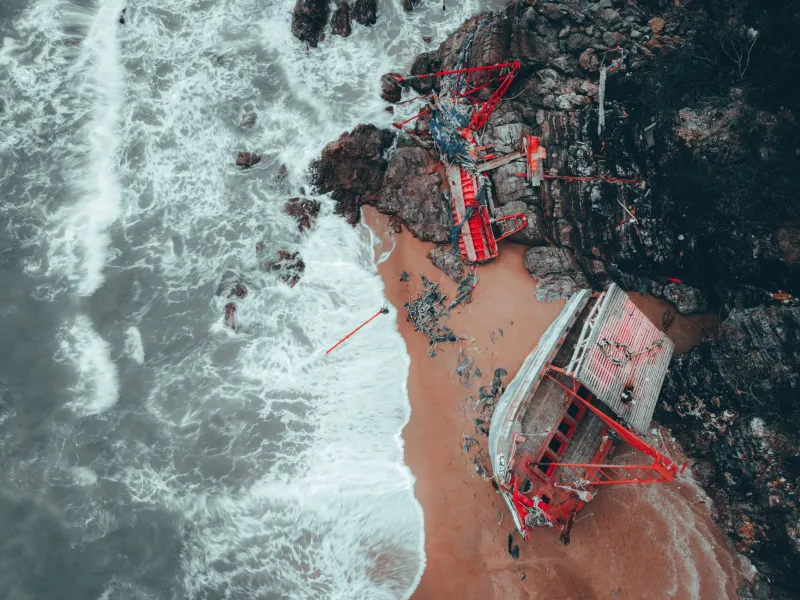
Picture this: you're taking an early morning walk along a stretch of North Carolina beach, coffee in hand, watching the sun come up over the Atlantic. Then you see it — a rusted hulk of a vessel, maybe 40 feet long, half-swallowed by sand, with no crew, no markings anyone can immediately read, and no obvious explanation for how it got there overnight. You're not dreaming. You've just met a ghost ship.
It sounds like something out of a maritime horror novel, but derelict vessels washing ashore on American coastlines is a real and surprisingly common phenomenon. From the Gulf Coast to the Pacific Northwest, these ghostly arrivals have been puzzling beachgoers, frustrating local officials, and keeping maritime historians very busy for decades. And lately, they seem to be showing up more often.
What Exactly Is a Ghost Ship?
The term gets used loosely, but in maritime circles, a ghost ship typically refers to any vessel found adrift or aground with no crew aboard and no clear explanation for its condition. Some are massive cargo ships. Others are small fishing boats or pleasure crafts. A few have been traced back to specific disasters or storms. Many have not.
What makes them so compelling — and so unsettling — is the sheer range of explanations behind them. Maritime historian Dr. Ellen Ware, who has spent years cataloging derelict vessel incidents along the Eastern Seaboard, puts it plainly: "Every ghost ship has a story. The frustrating part is that we don't always get to hear it."
The Usual Suspects
So what actually sends a ship drifting toward an American beach? The answers are more varied than you might expect.
Storms and natural disasters account for a significant chunk of derelict vessels. Hurricanes in particular are notorious for tearing boats from their moorings and sending them on unplanned voyages. After major storms along the Gulf Coast, it's not unusual for local officials to spend weeks tracking down vessels that have ended up miles from where they were docked.
Climate change is increasingly part of the conversation too. Rising sea levels, more intense storm systems, and shifting ocean current patterns are all contributing to the movement of debris — including boats — in ways that weren't as common even 20 years ago. Coastal salvage professionals say they've noticed a definite uptick in the number of calls they receive following major weather events.
Insurance fraud is another explanation that comes up more than you'd think. Maritime investigators have documented cases where boat owners — sometimes facing financial hardship, sometimes just looking for a payout — have deliberately set vessels adrift and reported them stolen or lost at sea. The scheme doesn't always go as planned, and the boat ends up grounding itself on a public beach instead of disappearing quietly into open water.
And then there's the darkest category: piracy and smuggling operations gone wrong. Not every ghost ship found on a US beach got there by accident. Law enforcement has investigated vessels suspected of being used in drug or human trafficking operations that were abandoned mid-journey. In some cases, the crew vanished voluntarily. In others, the circumstances were considerably more grim.
The People Who Deal With This Stuff
When a derelict vessel washes ashore, the response involves a surprisingly large cast of characters. Local law enforcement and the Coast Guard are usually first on the scene. Then come the maritime salvage crews — the unsung professionals who have to figure out what to do with a 60-ton piece of rusting steel that's now sitting on a public beach.
Jake Morrow has been running a coastal salvage operation out of Pensacola, Florida for over 15 years. He's seen things wash up that have genuinely surprised him. "Most of the time it's pretty straightforward — storm damage, owner couldn't afford to deal with it, boat breaks free and ends up on someone's beach," he says. "But every once in a while you get something where you look at it and think, there's a story here that nobody's going to tell me."
Morrow describes one incident where a vessel arrived with a full galley set for a meal — dishes on the table, food still in pots on the stove — but no crew anywhere. "We never found out what happened. The investigation went cold. That one still bothers me."
What About the Beachfront Residents?
For people who live along the coast, a ghost ship arrival is equal parts fascinating and frustrating. The initial discovery is usually exciting — there's a reason these things go viral on social media within hours. But the aftermath is often a bureaucratic headache.
Deborah Tran lives in a beachfront community near Galveston, Texas, and remembers when a large fishing vessel appeared on the shore near her neighborhood after a tropical storm a few years back. "Everyone came out to look at it. People were taking pictures, kids were climbing on it. It was kind of amazing for about a day and a half," she recalls. "Then it just... stayed there. For months. Nobody could agree on whose responsibility it was to remove it."
That jurisdictional confusion is a recurring theme. Depending on where a vessel grounds itself — and whether it's in state waters, federal waters, or on private property — the question of who has to deal with it can get complicated fast. Removal costs can run into the hundreds of thousands of dollars, and if no owner can be identified, those costs often fall on local governments or taxpayers.
The Shipping Industry's Dirty Secret
Not all ghost ships are dramatic crime scenes or storm casualties. Some are the result of a quieter, more systemic problem: deliberate abandonment by shipping companies.
International shipping regulations require vessels to be properly decommissioned, but that process is expensive. Some operators — particularly smaller outfits running older ships — find it more economically convenient to simply... stop paying attention to a vessel. Crew members have been stranded in foreign ports when owners disappeared. Ships have been left anchored in international waters until they eventually drift. It's a problem that maritime advocacy groups have been pushing regulators to address more aggressively, with mixed results.
What Happens When You Find One?
If you're ever walking a beach and come across a vessel that looks abandoned, the guidance from maritime authorities is consistent: don't board it, don't touch it, and call the Coast Guard immediately. Beyond the obvious safety concerns — unstable structures, fuel leaks, potential legal issues — there's always the possibility that a vessel is involved in an active investigation.
That said, the allure is completely understandable. There's something deeply human about a ship with no crew and no explanation. It's a puzzle, a mystery, a piece of someone else's story that washed up at your feet.
And for coastal travelers, it's a reminder that the ocean is always doing something unexpected — that the beach you walked yesterday might look completely different tomorrow morning, and not always in ways you'd anticipate.
The sea gives and the sea takes, as the old saying goes. Sometimes it gives you a ghost ship, and you spend the rest of your life wondering why.