Ports of the Past: America's Forgotten Harbor Towns Where History Still Floats
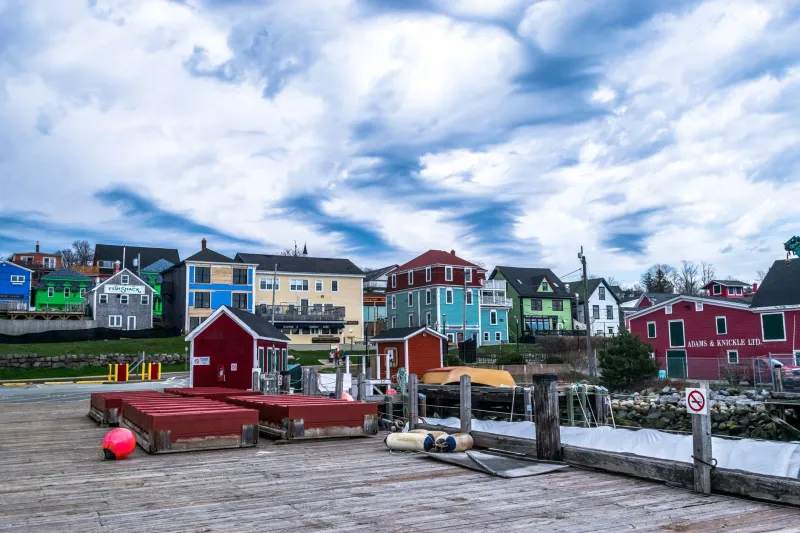
Most people plan a beach vacation the same way: find the water, book the rental, pack the cooler. And look, there's nothing wrong with that. But if you've ever stood at the edge of an old wooden dock and felt like something happened here — something that mattered — you already know there's another kind of coastal trip waiting for you.
America's coastline didn't start with resort developments and vacation rental apps. It started with ships. With trade winds and timber and the kind of commerce that built entire cities from the waterline up. And a surprising number of those original port towns are still out there, largely overlooked by the mainstream travel crowd, carrying their history in the bones of their piers and the depths just offshore.
Here's where to start.
Bath, Maine: Where American Shipbuilding Was Born
Tucked along the Kennebec River about an hour north of Portland, Bath doesn't get nearly the attention it deserves. This small Maine city was once one of the most productive shipbuilding hubs in the entire country — at its peak in the mid-1800s, it was turning out more wooden vessels per capita than almost anywhere else on the Eastern Seaboard.
The Maine Maritime Museum is the anchor here, and it genuinely earns that title. The campus sits on the grounds of a former shipyard, and the exhibits don't just tell you about the industry — they put you inside it. Boat-building demonstrations, original shipyard structures, and an impressive collection of paintings, models, and navigational tools make this one of the most immersive maritime museums in the US.
Stay downtown if you can. Several of Bath's historic inns are housed in sea captains' mansions, which means you're sleeping in rooms that were once funded entirely by the success of the Atlantic trade. That context changes how you see the crown molding.
Beaufort, North Carolina: Blackbeard's Old Stomping Ground
Beaufort (pronounced BOH-fort, not BYOO-fort — locals will correct you) sits on the Crystal Coast and carries a maritime résumé that goes well beyond pirate lore, though the pirate lore is genuinely excellent. Edward Teach, better known as Blackbeard, met his end just offshore in 1718. His flagship, Queen Anne's Revenge, ran aground near Beaufort Inlet, and the wreck site has been actively excavated since the late 1990s.
The North Carolina Maritime Museum in downtown Beaufort holds recovered artifacts from the Queen Anne's Revenge — cannons, anchors, navigational instruments — displayed with enough context to make the whole story land. From there, you can walk two blocks to the waterfront and look out at roughly the same view those sailors had three centuries ago.
Beaufort is also a stop on the Great Loop, the popular inland waterway route circumnavigating the eastern US, so the docks are reliably lively with cruisers and liveaboards. Talking to the people passing through is half the experience.
Mystic, Connecticut: More Than a Pizza Commercial
Yes, the Mystic Pizza thing is real and yes, the restaurant is still there. But Mystic's actual claim to fame runs much deeper than a 1988 Julia Roberts movie. The Mystic Seaport Museum is arguably the most comprehensive maritime history destination in the entire country — a living, working recreation of a 19th-century coastal village spread across 37 acres.
You can board the Charles W. Morgan, the last surviving wooden whaleship in America, which is both humbling and a little haunting. The village includes a working shipyard, period-accurate shops, and staff in historical dress who can answer questions with the kind of specificity that makes you realize how little you actually knew about how whale oil lit American homes for a century.
Mystic works especially well as a shoulder-season destination. The crowds thin out considerably after Labor Day, the foliage along the Mystic River is spectacular in October, and you get a more contemplative experience at the museum when you're not navigating around summer tour groups.
Apalachicola, Florida: The Gulf's Overlooked Oyster Port
While the Florida Panhandle draws millions to its white-sand beaches every year, tiny Apalachicola sits quietly about 80 miles southwest of Tallahassee, doing its own thing. In the 1800s, it was one of the busiest cotton-shipping ports in the entire South, moving cargo through the Apalachicola River basin out to the Gulf and beyond.
The cotton economy collapsed after the Civil War, and Apalachicola never quite rebuilt in the same way — which is exactly why it still looks the way it does. The historic district is remarkably intact, with over 200 buildings listed on the National Register of Historic Places. Walking the waterfront here feels genuinely different from most Florida coastal towns. There's an unhurried quality to it, a sense that the place didn't get the memo about becoming a destination.
The John Gorrie Museum State Park honors a local physician who invented an early ice-making machine in the 1840s — a piece of technology that quietly changed American life and helped make long-distance food shipping viable. It's a strange, wonderful footnote to the maritime story.
And the oysters. Obviously, the oysters.
Port Townsend, Washington: The Victorian Port That Time Forgot
On the northeastern tip of the Olympic Peninsula, Port Townsend was supposed to be the great city of the Pacific Northwest. In the 1880s, developers were certain the transcontinental railroad would terminate there, and they built accordingly — grand Victorian buildings, wide commercial streets, ambitious civic infrastructure. Then the railroad went to Seattle instead, and Port Townsend essentially froze in place.
What that means for visitors today is an almost absurdly well-preserved 19th-century port town. The Jefferson County Historical Society runs a solid museum, but the real experience is just walking the streets and waterfront. Fort Worden State Park, a former coastal artillery installation, sits just north of downtown and offers camping and lodging in the original officers' quarters — bunking in a Victorian-era military residence with views of the Strait of Juan de Fuca is exactly as good as it sounds.
The Northwest Maritime Center hosts WoodenBoat Festival every September, drawing wooden vessel enthusiasts from across the country. If that's your thing, plan around it.
How to Get the Most Out of a Maritime History Trip
The difference between a history trip that lands and one that doesn't usually comes down to pacing. Don't try to hit every museum and historical marker in a single day. Pick one or two anchor experiences and leave room to wander — to follow a street that looks interesting, to talk to the person running the bait shop, to sit at the end of a pier for twenty minutes and just watch the water.
Maritime history is also best understood in layers. Read a little before you go — not a textbook, just enough to give you a frame. A chapter on the colonial Atlantic trade, or a quick overview of Civil War naval strategy, or a short piece on the American whaling industry. When you arrive and see the actual artifacts, the actual geography, the actual scale of these places, it clicks in a way that no amount of museum signage can manufacture.
The coast has always been where America's story started. These towns are proof that it didn't wash away.