Seaweed Rush: The Beach Towns Battling Over the Billion-Dollar Algae Washing Up on Their Shores
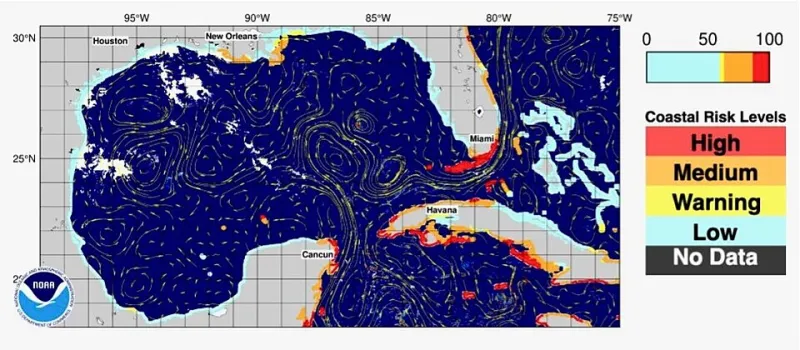
Photo: NOAA AOML, Public domain, via Wikimedia Commons
You've stepped over it a hundred times — that rubbery, sun-baked tangle sitting at the high tide line, smelling faintly of low tide and salt. Most beachgoers give it a wide berth. But a growing number of entrepreneurs, scientists, and local governments are suddenly paying very close attention to what's washing ashore. Seaweed, it turns out, might be worth fighting over.
Across the US coastline, a slow-burning argument is picking up speed. Who owns what washes up on the beach? Who gets to harvest it? And what happens to the shoreline — and the communities that depend on it — when the answer to those questions gets messy?
From Nuisance to Resource
For a long time, seaweed was mostly a problem. Florida beach towns spent millions hauling away mountains of sargassum — the free-floating brown algae that drifts in from the open Atlantic — just to keep their shorelines looking postcard-ready. Coastal municipalities in the Gulf and Southeast treated it like yard waste, something to be cleared before the tourists complained.
Then someone started doing the math on what that "waste" could actually become.
Seaweed and algae are now being seriously explored as raw materials for bioplastics, agricultural fertilizers, animal feed supplements, skincare ingredients, and even human food products. The global seaweed market is projected to surpass $85 billion by the early 2030s, and American producers are scrambling to get a foothold. Suddenly, that pile of rotting sargassum isn't an eyesore — it's feedstock.
Startups along the Gulf Coast have begun experimenting with processing facilities that convert harvested sargassum into biochar and slow-release fertilizers. Up in New England, kelp farming operations are multiplying off the coasts of Maine and Massachusetts, with harvesters eyeing both cultivated crops and naturally occurring coastal deposits. The pitch is compelling: a renewable, carbon-absorbing resource that grows without fresh water, pesticides, or land.
The Ownership Problem Nobody Warned You About
Here's where things get genuinely complicated. Coastal property law in the US is a patchwork quilt, and it was never designed with seaweed harvesting in mind.
In most states, the public owns the wet sand — the area between the low and high tide lines — but the rules about what you can actually do there, and what you can take from it, vary wildly. Some states treat naturally deposited organic material as fair game for collection. Others consider it part of state-owned coastal resources, subject to permitting and regulation. A few haven't addressed it at all, leaving a legal gray zone that entrepreneurs and local governments are now racing to define.
In Florida, county commissioners in several beach communities have found themselves fielding permit requests from companies wanting to harvest sargassum at scale — sometimes before any state-level framework existed to evaluate those requests. Maine has been working to balance the interests of its growing aquaculture industry against the concerns of fishermen and coastal residents who worry about who really benefits when algae becomes a commodity.
The core tension isn't hard to understand: when something that used to be considered a nuisance becomes valuable, the question of who holds the rights to it gets political fast.
What Locals Are Actually Worried About
Talk to the people who live along these coastlines and you'll hear a few recurring themes.
Beach access is a big one. Some residents fear that commercial harvesting operations — even if technically permitted — will mean equipment on public beaches, restricted zones, and the slow creep of industrial activity into spaces that have always been communal. There's a real anxiety about what it looks like when a stretch of shoreline that families have walked for generations starts to feel like a worksite.
Ecological health is the other major concern. Seaweed and algae aren't just floating debris — they're habitat. Sargassum mats in the open ocean support dozens of species, including juvenile sea turtles, fish, and invertebrates. Even the stuff that washes ashore plays a role in coastal nutrient cycles, feeding beach ecosystems and stabilizing dunes over time. Ecologists warn that large-scale removal, if done carelessly, could have downstream effects that aren't fully understood yet.
"We're being asked to make decisions about harvesting resources when we don't fully know what removing them at scale will do," one coastal ecologist told a local Florida newspaper last year. That uncertainty sits uncomfortably alongside the speed at which commercial interest is moving.
The Towns Trying to Figure It Out
Not every coastal community is approaching this the same way, which makes for an interesting case study in how beach towns navigate new economic pressures.
Some municipalities are leaning in. A handful of Gulf Coast counties have started exploring partnerships with seaweed processors, framing it as a win-win: companies handle the cleanup that towns would otherwise pay for, and everyone benefits from a cleaner beach. In theory, it reduces municipal costs while creating local jobs in processing and logistics.
Others are pumping the brakes. Several New England towns have pushed back against expanded kelp farming leases, citing concerns about visual impact, navigation hazards for recreational boaters, and the precedent of privatizing coastal waters that communities have long treated as shared space.
Maine, which has one of the most active seaweed aquaculture industries in the country, has been threading this needle more carefully than most. The state's Department of Marine Resources has worked to develop permitting frameworks that try to weigh commercial viability against ecological monitoring requirements — though critics argue the process still favors industry over community input.
What Travelers Actually Notice
If you're planning a beach trip and wondering whether any of this affects your vacation, the honest answer is: it depends on where you go and when.
On parts of Florida's Gulf Coast, sargassum season (roughly spring through summer) can dramatically affect beach conditions, and how aggressively a given town is managing — or harvesting — that seaweed will shape what you find when you show up. Some beaches look pristine because crews have been working around the clock. Others embrace a more natural look and feel, which means more seaweed underfoot but also a more ecologically intact shoreline.
In Maine and the Pacific Northwest, where kelp farming is most visible, you may spot buoy lines and farm infrastructure offshore — a reminder that these coastal waters are increasingly working landscapes, not just scenic backdrops.
None of this is a reason to avoid these destinations. If anything, it's a reason to pay closer attention to the places you visit and the conversations happening in the communities around them.
The Bigger Picture
The seaweed debate is really a proxy for something larger: how American coastal communities decide to balance economic opportunity against the values — access, ecology, shared space — that make beach towns worth visiting in the first place.
There's genuine potential in the seaweed economy. Done thoughtfully, it could create local jobs, reduce reliance on petrochemical products, and even help manage the sargassum blooms that climate change is making worse. But "done thoughtfully" requires the kind of slow, careful policymaking that doesn't always keep up with the speed of a gold rush.
The tide brings in a lot of things. What we decide to do with them says a lot about what we actually value on our shores.
